

“What types of liposuction do you offer?” is a common question we receive when new patients come in for their first liposuction consultation.
The truth is, most of these patients have already done their research ahead of time. They’ve read about hi-def lipo, VASER lipo, and laser assisted liposuction. They know what liposuction recovery looks like, what they can expect from scarring, and when they’ll see their results.
Still, there’s a difference between reading about something online and speaking directly with a board certified plastic surgeon about your unique situation and goals. In this article, we hope to give you a brief but accurate overview of the different types of liposuction we offer. Naturally, you’ll have more questions for Dr. Mason at your consultation. But this should give you a good place to start.
So, let’s begin with: How many types of liposuction are there?
Well, that really depends on who you ask. First off, there’s actually quite a long list of liposuction types, so if you want to divide all of them up as individually as possible, but this becomes cumbersome for obvious reasons. And because of that, many plastic surgeons like to group liposuction types together.
At our practice, we typically divide our liposuction options into five main liposuction types.
What Are the Different Types of Liposuction?
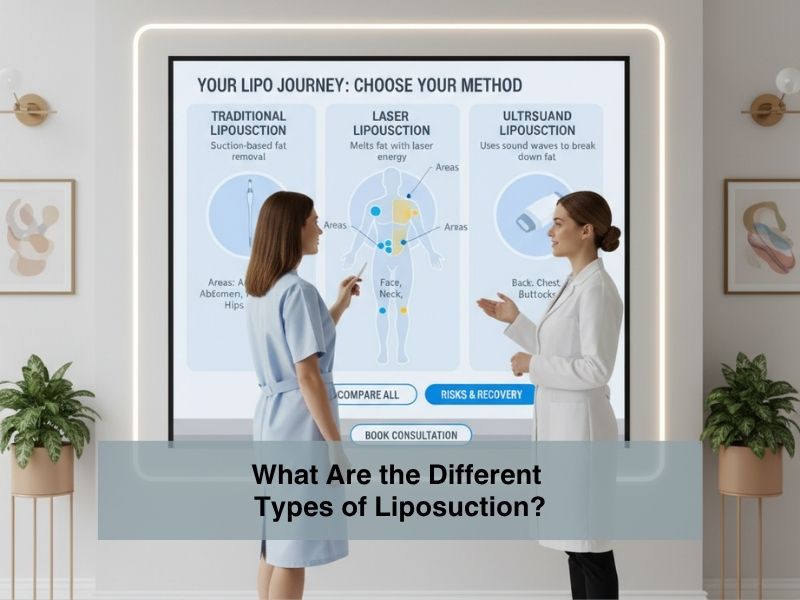
Generally speaking, all liposuction procedures are basically the same. What we mean is that in all cases, liposuction involves the suctioning out of excess fat cells.
Exactly how and where this is done, however, depends on the individual and their specific goals and expectations. And this is where we get the different types of liposuction.
Traditional Liposuction
Traditional liposuction, also known as suction assisted liposuction, is the most common type of liposuction available. Essentially, incisions are made in the target location(s) on the body, then a thin tube called a cannula is inserted, and a high pressure vacuum is used to suction out fat from the body.
Power Assisted Liposuction
Power assisted liposuction procedures are the same as traditional liposuction surgery, but the cannula used is a vibrating one. This helps to break up stubborn fat for an easier removal process.
Ultrasound Assisted Liposuction (UAL)
This liposuction technique uses ultrasonic vibrations. The high energy of the vibrations helps to dissolve and liquefy fat cells before they are removed.
VASER Liposuction
VASER stands for vibration amplification of sound energy at resonance. VASER liposuction is basically an updated version of ultrasound assisted liposuction. It is often touted for its ability to cause very little damage to surrounding blood vessels, which leads to less bleeding, bruising, and swelling and a smoother overall recovery experience.
Laser Assisted Liposuction
And finally, this liposuction procedure uses laser energy to dissolve the fatty tissue before it is removed. In addition, use of a laser stimulates collagen production for better-looking skin.
Which Type of Liposuction Is Right for You?
Naturally, you’ll want to speak directly with your plastic surgeon to know for sure which type of lipo is best for you. Most liposuction plastic surgeons will need to assess your anatomy and perform a brief physical exam before they can make any recommendations.
They’ll also want to hear exactly what your goals and expectations are. Keep in mind that certain surgeons have preferred methods of liposuction, so it’s possible they don’t offer all of the types listed above.
Your medical history and overall health status will also play a role in determining which technique is safest and most effective for your specific situation.
Additionally, factors like your skin elasticity, the amount of fat to be removed, and your liposuction recovery time preferences can influence which liposuction method your surgeon ultimately recommends.
Where Can You Get Liposuction on the Body?

Most areas of the body can be treated with liposuction. The “top areas” (most popular zones for liposuction) include the abdomen, love handles (flanks), upper arms, back, hips and buttocks, chest, face and neck area, and chest (breasts).
Sometimes, different types of liposuction work better or worse on certain areas. So, where you desire liposuction is something your surgeon will definitely take into account when deciding on the best type of liposuction for you.
Some body areas with denser fat deposits may require more aggressive techniques, while delicate zones like the face typically benefit from gentler, more precise methods.
It’s also worth noting that multiple areas can often be treated during a single liposuction session, though your surgeon will evaluate whether combining treatment zones is appropriate based on the total volume of fat removal and your overall safety.
Types of Liposuction FAQ
Does insurance cover liposuction?
In most cases, insurance does not cover liposuction because it is considered an elective cosmetic procedure rather than a medically necessary treatment. Health insurance companies are designed to cover procedures that are essential for treating disease, injury, or functional impairment, and standard liposuction for body contouring purposes does not meet these criteria.
What is the most effective type of liposuction?
Tumescent liposuction is widely considered the best liposuction technique due to its proven safety and effectiveness. This method involves injecting a local anesthetic solution to numb tissue, reduce bleeding, and facilitate fat removal. Ultrasonic liposuction and laser liposuction are also effective, using ultrasound energy to destroy fat cells before extraction.
What is the least painful liposuction?
Tumescent liposuction using a local anesthetic is typically the least painful option. Patients remain awake while the surgeon inserts a cannula to remove fat deposits. This minimally invasive cosmetic surgery avoids general anesthesia risks and allows for faster recovery with reduced discomfort compared to traditional liposuction methods.
What happens 10 years after liposuction?
Liposuction permanently removes fat cells from treated areas, but the patient’s body can still gain weight in remaining cells. Results depend on maintaining a stable weight through diet and exercise, it’s not a weight loss method. Natural aging may cause excess skin laxity over time, though fat redistribution occurs proportionally.
Are you awake during liposuction?
Yes, many patients undergo awake liposuction using local anesthesia rather than general anesthesia. This allows real-time communication with the surgeon for optimal body contouring results. The tumescent solution numbs the treatment area, making the procedure comfortable while you remove fat safely without sedation risks.
What is the best age to get Lipo 360?
There’s no strict age requirement, though most patients are between their 20s and 60s. The ideal candidate has good skin elasticity, stable weight, and realistic expectations. Adults in their 30s and 40s often benefit most due to better skin retraction after fat removal, but health matters more than age.
How much does liposuction cost?
The cost of liposuction will inevitably vary based on your needs, who your surgeon is, how much fat you want removed, and more. Most procedures start at $2,500 per area. However, it all depends on your unique circumstances, so be sure to schedule a consultation appointment with a board certified cosmetic surgeon for more details.
Should I get a tummy tuck or liposuction?
When body contouring is your goal, the numerous body contouring plastic surgery procedures available can often seem confusing. Fortunately, the difference between tummy tuck surgery and liposuction is quite clear.
Essentially, if you have loose skin on your stomach, a tummy tuck is right for you. You may need liposuction to remove unwanted fat as well, but loose skin can only be treated with a tummy tuck. Often, tummy tuck patients have unwanted skin from pregnancy or weight loss.
If unwanted fat is your only issue, a simple liposuction technique is what you should be looking for.
What type of anesthesia do you have for liposuction?
Most liposuction patients will receive general anesthesia for their procedures. However, in rare cases, there may be a surgical procedure that only requires local anesthesia and IV sedation.
What is tumescent liposuction?
Tumescent liposuction is typically performed with smaller incisions, microcannulae, and the use of a tumescent anesthesia. The anesthesia helps to swell and firm up the fat, which reduces some of the negative after-effects of liposuction and minimizes bruising and bleeding.
Book a Consultation Appointment Today
Dr. Rachel Mason of La Femme Plastic Surgery is a board certified plastic surgeon with extensive experience performing liposuction treatments and other body contouring procedures. If you would like to change your body shape with liposuction, call La Femme Plastic Surgery today to schedule a consultation with Dr. Mason and learn more about your liposuction options.
- References